
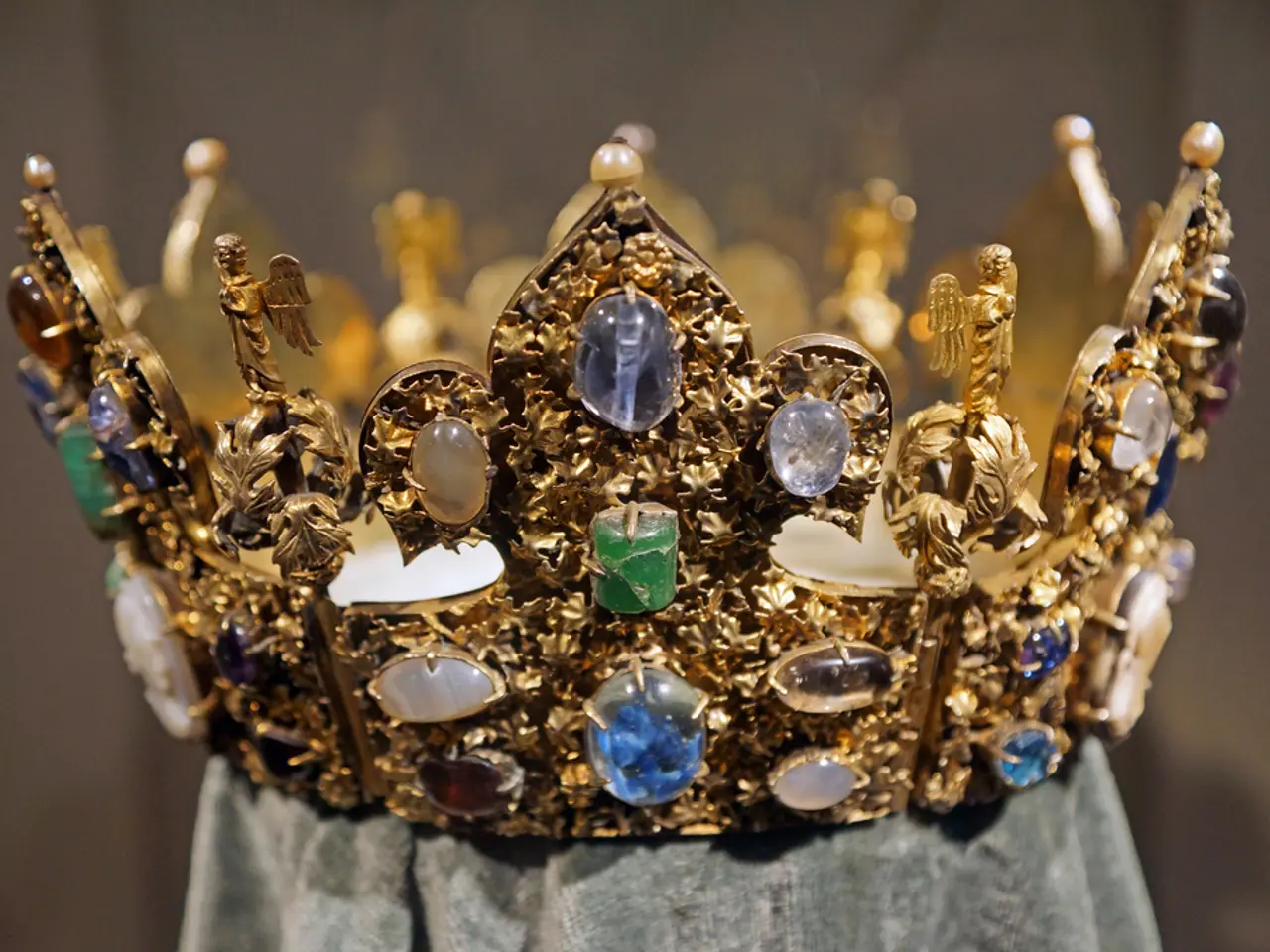
Amethyst's paler sister, Citrine, shines bright in the realm of jewels with its sunny hue.
Citrine, often referred to as the "merchant's stone," has held significant cultural and symbolic meaning across various societies throughout history. This vibrant, golden gemstone has been cherished for its association with prosperity, happiness, and positive energy.
Ancient Greece and Rome
In ancient Greek and Roman times, citrine was used in jewelry and decorative items, symbolizing warmth and positivity. Its vibrant yellow to golden hues were associated with the sun, representing energy and optimism [1].
Middle Ages
During the Middle Ages, citrine was believed to possess powerful healing properties. It was used in amulets to protect against evil spirits and negative energy, reflecting its role in spiritual protection [1].
Chinese Culture
In ancient China, citrine was known as the stone of success. Chinese Emperors often wore citrine jewelry, as it was believed to bring success and prosperity to the wearer. This cultural significance tied citrine to wealth and good fortune [2].
General Symbolism Across Cultures
- Prosperity and Wealth: Across many cultures, citrine is associated with attracting wealth and promoting financial success. It is often carried to enhance prosperity and good fortune [2][4].
- Positive Energy and Happiness: Citrine is cherished as a symbol of joy, vitality, and positive energy. It's believed to uplift spirits and dispel negative emotions, making it a popular choice for jewelry and spiritual practices [4].
- Metaphysical Properties: In metaphysical contexts, citrine is linked to intuition, focus, and self-esteem. It's believed to help sharpen mental clarity and boost confidence [2].
Modern Times
Citrine jewelry is experiencing a resurgence in popularity, with one-of-a-kind Citrine engagement rings gaining traction as a unique and meaningful alternative to traditional diamond rings.
Citrine is believed to stimulate creativity, enhance mental clarity, and boost mood and optimism.
Care and Maintenance
When caring for Citrine jewelry, it's important to be mindful of heat exposure, as its vibrant colors can fade or get damaged when exposed to strong heat. It's best to avoid exposing Citrine to strong heat and harsh chemicals, and prolonged exposure to sunlight can fade its vibrant colors. Always remove your Citrine jewelry before swimming in chlorinated water or using cleaning products.
Market Dynamics
The market for Citrine is incredibly dynamic, with a range of values depending on factors like color, clarity, and origin. While Citrine is relatively affordable, rare varieties like Madeira Citrine can command higher prices. It's essential to know that the gemstone comes in various shades, from lemon yellow to deep orange, and that much of the Citrine in the market is heat-treated Amethyst, so always inquire about the stone's origin and treatment.
Ethical Sourcing
Ethical sourcing is a significant concern in the Citrine market, and it's essential to ensure that responsible mining practices are followed and that the gemstones have a chain of custody to prove their ethical origins.
Conclusion
From its ancient roots in Greek and Roman culture to its modern-day resurgence in popularity, citrine continues to captivate with its vibrant colors and symbolic significance. Whether worn as jewelry, used in art and interior decor, or revered for its spiritual properties, citrine remains a beloved gemstone that resonates with people from all walks of life.
[1] Smith, R. (2018). The Complete Book of Gemstones. DK Publishing.
[2] Kunz, G. F. (2000). The Curious Lore of Precious Stones. Dover Publications.
[3] Brady, K. (2017). The Book of Stones: Who They Are and What They Teach. North Atlantic Books.
[4] Hall, E. (2015). The Crystal Bible: A Definitive Guide to Crystals. HarperOne.
- In the realm of ethics, it's crucial for businesses dealing with citrines to ensure ethical sourcing, promoting responsible mining practices and maintaining a transparent chain of custody to prove the gemstone's ethical origins, mirroring modern expectations of a science-driven society.
- As financial investments continue to grow increasingly complex in the age of science and business, affluent clients may find appeal in the diverse yet affordable market dynamics of citrine, combining the financial aspect with the gemstone's symbolic association with prosperity and wealth.




