
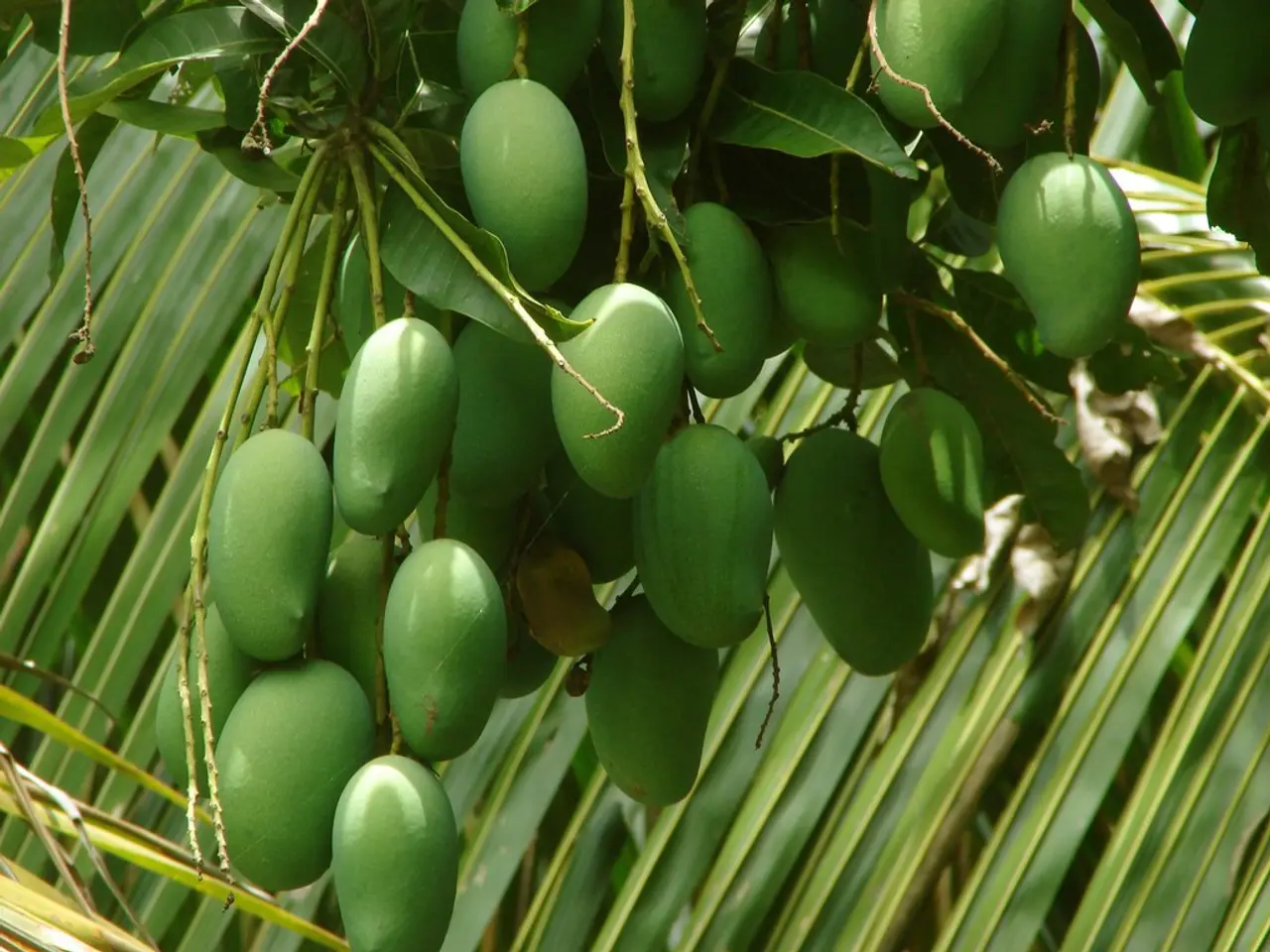
Comprehensive Instructions for Mango Cultivation for Novice Farmers in India
In the heart of India, where the sun shines bright and the soil is rich, lies a golden opportunity for first-time farmers: mango farming. India, the world's largest mango producer, offers a profitable business with popular varieties like Alphonso, Kesar, Himsagar, and Langra, known for their rich flavors and high market value.
Selection of Saplings and Spacing
The first step in establishing a mango farm is to choose 40–60 saplings per acre, spacing them about 25×25 feet apart to ensure optimal root development and tree growth.
Soil Preparation
Preparing the farmland is crucial. Dig planting pits around one meter deep and enrich them with farmyard manure or compost to provide nutrients for young trees.
Climate and Agro-Climatic Conditions
Mango trees thrive in tropical and subtropical climates with warm temperatures and moderate rainfall. Understanding local soil type, drainage, and water availability is essential for healthy growth.
Water Management
Use efficient irrigation methods like drip or sprinkler irrigation to conserve water and support drought resilience.
Time for Yield
Patience is key in mango farming. Expect the first mango yield in about 3–4 years after planting.
Technology and Monitoring
Adopt modern techniques such as digital crop monitoring, satellite imagery, and AI-based advisories to make timely decisions on soil health, pest control, and resource management.
Market Research and Business Model
Analyze the local and export market demand for mango varieties. Consider direct sales, value addition (e.g., mango pulp processing), and use of digital platforms for better price realization.
Sustainability and Soil Health
Incorporate organic inputs and practices like agroforestry or intercropping where suitable to maintain soil fertility and biodiversity.
Harvesting and Post-Harvest Care
Harvest mangoes when they are ripe yet still hard to avoid bruising during handling or shipping.
Pest and Disease Management
Common pests like aphids, fruit flies, and mealybugs can harm mangoes, while diseases like anthracnose and powdery mildew can impair yield. Integrated pest management (IPM) techniques, including organic treatments and proper pruning, can help manage pests and diseases.
Choosing the Right Type of Mango
Choosing the right type of mango is crucial for the success of a mango farm. Consider factors such as local market demand, climate suitability, and the desired flavour profile.
Pruning
Pruning helps maintain the tree's shape, promotes healthy growth, and boosts fruit yield.
Maintaining Space
It's important to maintain a distance of at least 10-12 meters between mango trees to allow for proper growth and sunlight exposure.
In Conclusion
By following these guidelines, new mango farmers in India can establish a healthy, profitable, and sustainable mango farming business.
To ensure the farm's success, it's crucial to invest in finance for buying the saplings and implementing proper farm management strategies. Appropriate water management through efficient irrigation methods, such as drip or sprinkler irrigation, is essential to conserve water and support drought resilience. When selecting the right type of mango, factors like local market demand, climate suitability, and flavor profile should be taken into account. To establish a profitable mango business, it's essential to conduct market research and develop a proper business model, considering direct sales, value addition, and digital platforms for better price realization.




