
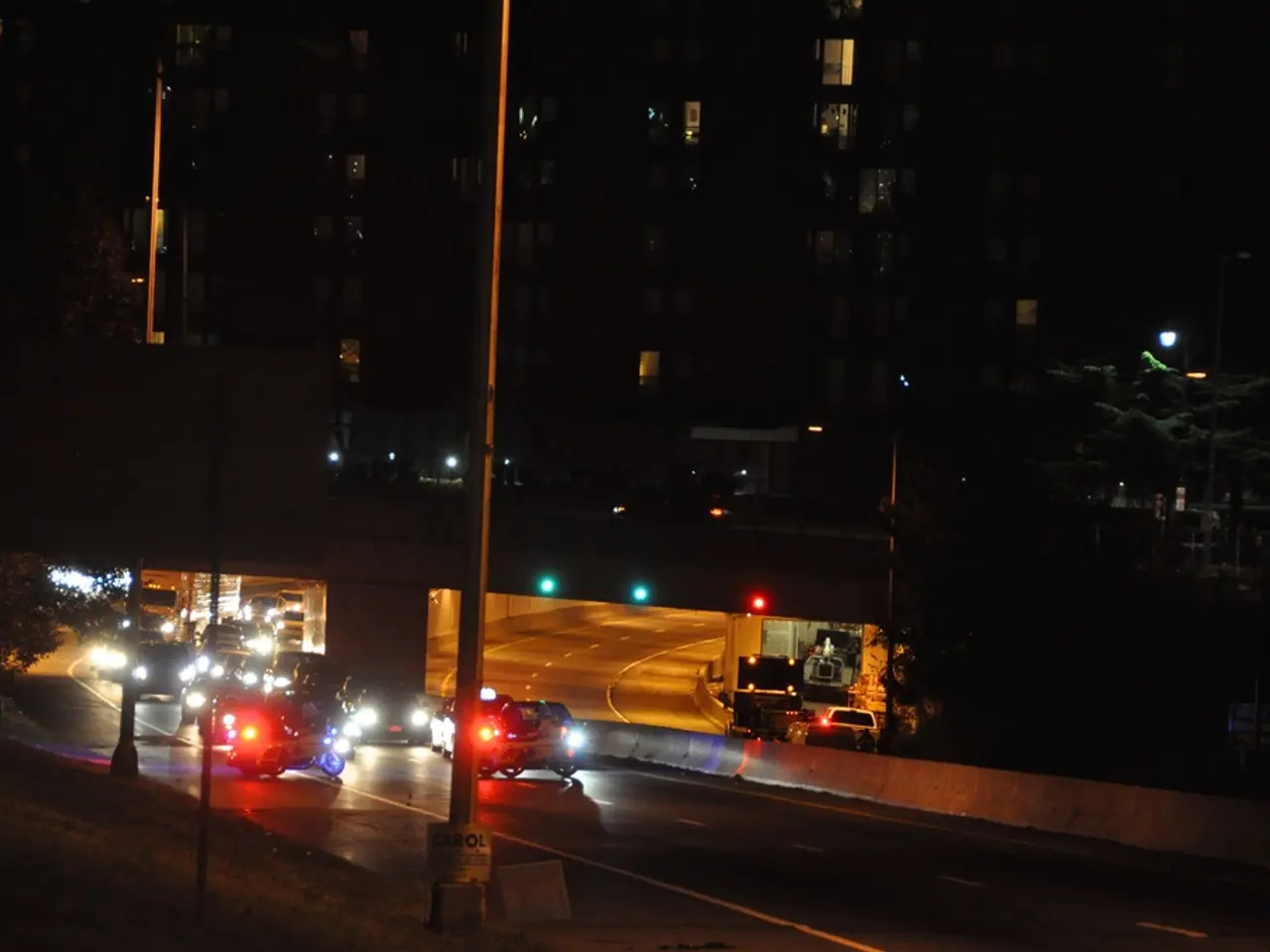
Gridlock in Gütersloh causing city-wide commuter confusion
The reported malfunction at the Ludger Osterkamp level crossing in Gütersloh has raised concerns about potential traffic disruptions as the Teutoburger Wald-Eisenbahn (TWE) railway line prepares for reactivation.
The crossing, which is part of 77 crossings along the route from Harsewinkel to Verl where passenger trains are scheduled to run again from the end of 2027, has been the source of traffic jams due to a technical malfunction. This malfunction resulted in the barriers failing to open, causing traffic congestion on both sides of the crossing.
The frequency of such malfunctions at the crossing is not recorded. However, one of the bus drivers reported experiencing this issue approximately once a year at this crossing. A freight train had previously passed the location where the malfunction occurred.
The potential for traffic jams becomes a concern due to several factors:
- Frequency of train services: More frequent trains mean more frequent closures of the crossing barriers.
- Duration of barrier closure: How long the barriers remain down per train affects overall traffic flow.
- Traffic volume on the road: High vehicle volume during peak hours could exacerbate congestion.
- Alternative routes: Availability of detours can alleviate traffic buildup.
- Technical upgrades: If the malfunction is corrected and the crossing is modernized, this could minimize delays.
Without resolving the current malfunction and careful planning around TWE’s schedule and crossing management, traffic jams at Ludger Osterkamp level crossing could become a common problem once TWE reactivation occurs.
Local authorities will need to coordinate closely to mitigate these potential impacts. TWE CEO Henrik Wilkening acknowledged concerns about possible traffic jams and emphasized the importance of safety and efficiency to minimize waiting times. It took about 20 minutes for technicians to fix the problem at the Sundern crossing.
No new information is provided about the duration of the traffic jam or its extension towards the city center. Similarly, no information is given about the number of passengers or drivers who left the bus or turned around due to the standstill. Future closure times at the crossing are currently only roughly indicated.
At an information event, Wilkening stated that both red lights and closed barriers require patience, and the goal is to make all installations as efficient as possible. The bus service, line 203, was also affected by the malfunction.
No advertisements are mentioned in the current paragraph.
The industry of public-transit could be affected by the malfunction at Ludger Osterkamp level crossing, as delays in passenger trains might lead to dissatisfaction among commuters. The finance sector might also be impacted, as extended delays could potentially result in losses for businesses that rely on the timely arrival of goods transported via freight trains.
Given the potential for traffic jams and the need for careful planning around TWE's schedule and crossing management, it is crucial that the authorities make necessary investments in upgrading the infrastructure of the level crossings, particularly the one at Ludger Osterkamp, to minimize delays and maintain the efficiency of transportation services.




