
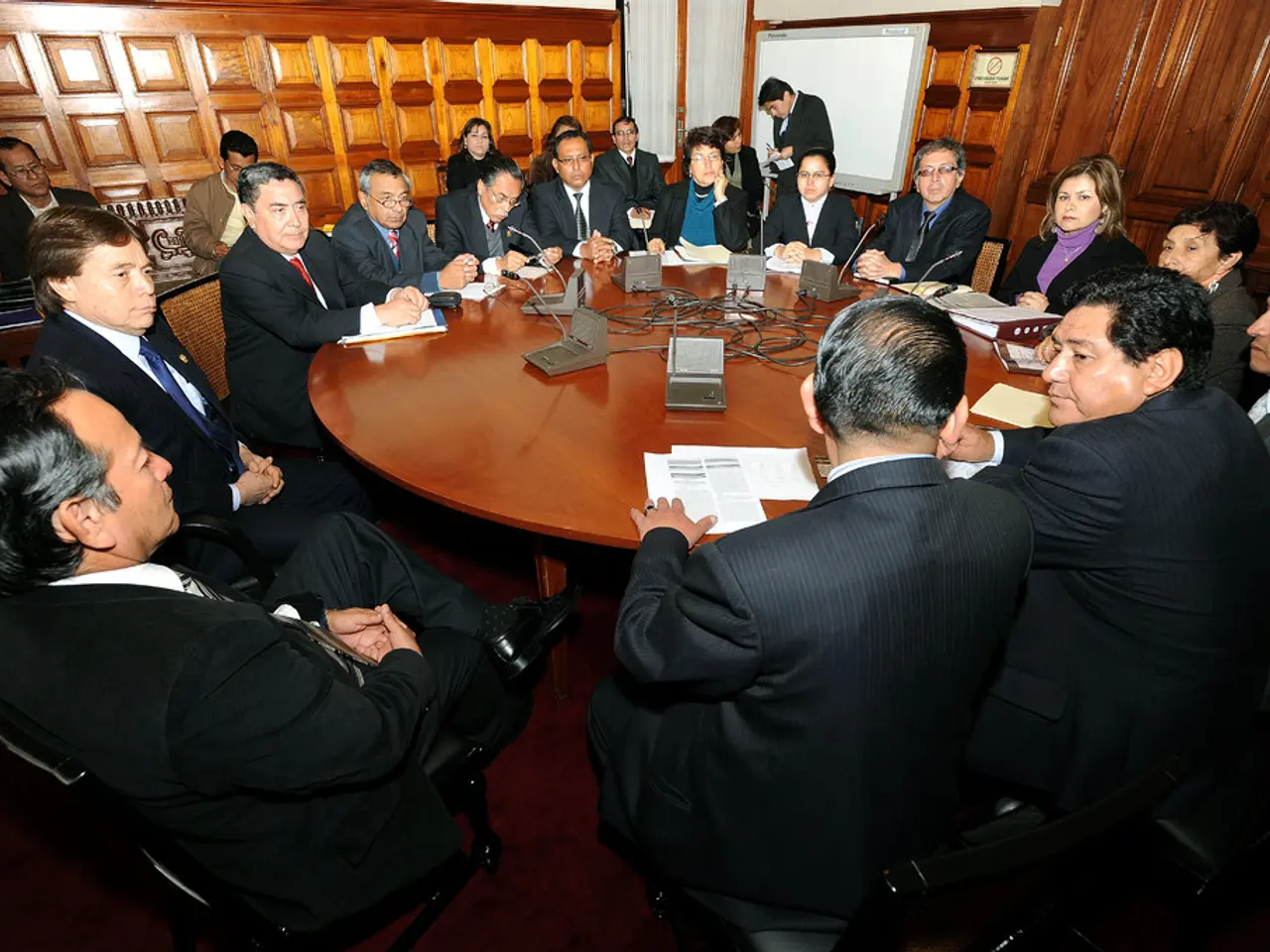
Guide mediating resolution in arbitration: Is the tribunal's intervention now necessary?
Facilitating Settlements in Arbitration: A Modern Approach
In the ever-evolving landscape of arbitration, a growing emphasis is being placed on facilitating settlements between disputing parties. This shift towards a more collaborative approach can be seen in the guidelines published by institutions such as the ICC Commission on Arbitration and ADR in 2023, and in the rules of various arbitral tribunals worldwide.
One of the key methods being adopted is Settlement Facilitation by Arbitral Tribunals. Arbitral tribunals are increasingly proactive in guiding parties towards considering settlement options, often encouraging negotiations or using mediators to assist in reaching an agreement. This approach is gaining traction in various legal cultures and key arbitral institutions.
Current Techniques
Med-Arb (Mediation-Arbitration)
A popular hybrid approach, Med-Arb combines mediation and arbitration. Parties first attempt to reach a settlement through mediation. If mediation fails, the mediator, who is often the same person, may act as an arbitrator and render a binding decision.
High-Low Arbitration
In High-Low Arbitration, parties agree on a range (high and low figures) for the arbitrator's award. This approach reduces uncertainty and anxiety by setting clear boundaries for the outcome.
Comparison Across Legal Cultures and Institutions
Legal Cultures
The approach to settlement facilitation varies between Western and Eastern cultures, as well as between civil law and common law systems. Western cultures tend to have more formalized and structured mediation and arbitration processes, while Eastern cultures may emphasize more informal and consensus-driven approaches.
Key Arbitral Institutions
Institutions like the International Chamber of Commerce (ICC) and the London Court of International Arbitration (LCIA) are actively promoting mediation and settlement during arbitration proceedings, encouraging parties to reach agreements through facilitated negotiations.
Emerging Trends
The digital economy and sustainable development are influencing the way arbitration handles disputes related to intangible assets, complex governance disputes, and sustainable development. This highlights the need for arbitration to remain relevant and responsive to changing business environments.
In conclusion, while techniques for facilitating settlement in arbitration vary, there is a growing emphasis on flexibility and adaptability across different legal cultures and institutions. The use of hybrid methods like Med-Arb and High-Low Arbitration reflects a desire to streamline dispute resolution processes while ensuring fairness and efficiency.
Businesses increasingly recognize the importance of finance in effectively settling disputes during arbitration, given the changing nature and complexity of worldwide business dealings. In this regard, the proactive role of arbitral tribunals in implementing settlement facilitation methods is particularly significant, as these approaches can significantly reduce the financial costs and time associated with arbitration.