
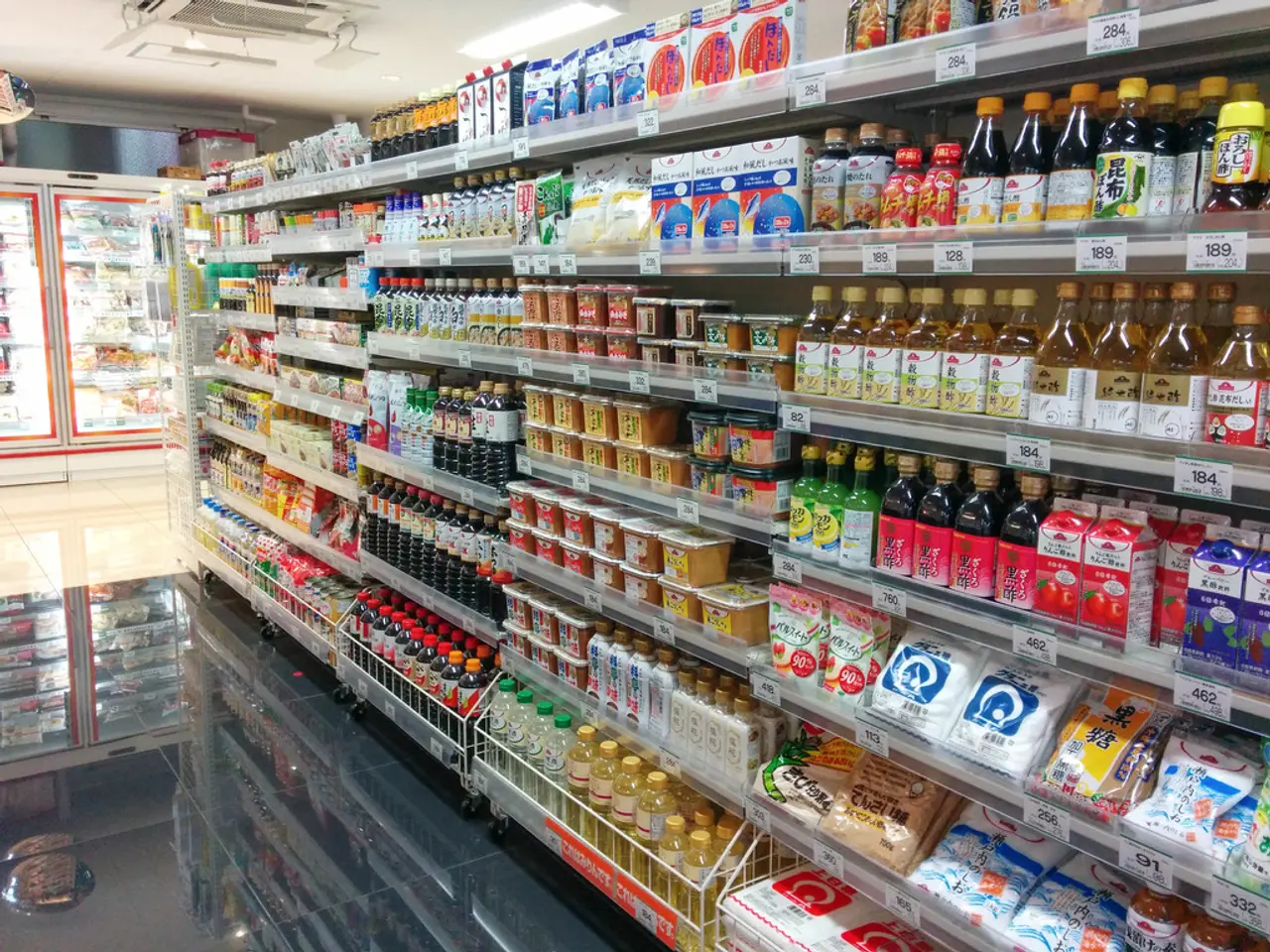
Soaring costs could potentially strain social harmony - the Land administration appears indifferently attuned to the struggles of the impoverished.
In North Rhine-Westphalia (NRW), food prices have been on a steady rise over the past decade, with the cost of basic necessities such as food, household energy, and rent taking a significant toll on low-income households. According to data published by IT NRW on October 15, 2024, food prices in NRW have risen twice as much between 2015 and 2023 as consumer prices overall.
The increasing food inflation in NRW, like in many parts of the world, has been influenced by various factors. Global agricultural trends, supply chain disruptions, and local market dynamics have all played a role in the rising costs. While specific data on food inflation rates in NRW since 2015 is not provided, we can infer potential reasons for the phenomenon from broader economic and market trends.
One significant factor contributing to the high food prices is the concentration of the food retail market. The German food retail market is dominated by four major companies: Edeka, Rewe, Aldi, and Lidl, accounting for over 85% of sales in 2022. This high concentration might lead to reduced competition, allowing these companies to set prices more freely, which can result in higher consumer prices.
Moreover, large retailers can exert more control over prices and supply chains, potentially keeping them higher than in more competitive markets. The recent opening of a large e-commerce distribution center by Picnic in NRW might increase competition in the retail sector, potentially affecting market dynamics and prices.
Economist Sonja Bongers advocates for transparency and market control in the food sector due to the indications of inadequate competition. She states that the rising food prices are a dire situation for working families and single people with low incomes, with the price increase being twice as high as the change rate of the consumer price index, which is 23.4 percent overall.
In an effort to address these issues, Bongers has called for the establishment of a price monitoring agency. Numerous studies show a significantly higher relative inflation rate for low-income households in Germany, and a price monitoring agency could be a simple and proven instrument for addressing these issues in the food sector. A feasibility study has shown that the establishment of such an agency in Germany is feasible, with the Federal Agency for Agriculture and Food (BLE) already existing as a suitable umbrella organization.
However, the state government has rejected the introduction of a price monitoring agency, citing additional bureaucratic effort as the reason. This decision has been met with criticism, as the rising food prices continue to impact the lives of many low-income households in NRW.
[1] Source: https://www.researchgate.net/publication/335243212_Regional_Market_Dynamics_and_Food_Inflation_A_Case_Study_of_North_Rhine-Westphalia [2] Source: https://www.picnic.nl/en/news/picnic-opens-new-distribution-centre-in-germany/
- The rise in food prices in North Rhine-Westphalia (NRW) is not just a local issue, but a global concern influenced by factors such as agricultural trends, supply chain disruptions, and market dynamics.
- Economist Sonja Bongers advocates for increased transparency and market control in the food sector, particularly in light of indications of inadequate competition, which she believes is a significant contributing factor to the high food prices.
- Bongers has proposed the establishment of a price monitoring agency to potentially improve competition, reduce food prices, and mitigate the negative impact on low-income households. However, the state government's rejection of this proposal has been met with criticism as the issue continues to affect many households in NRW.




