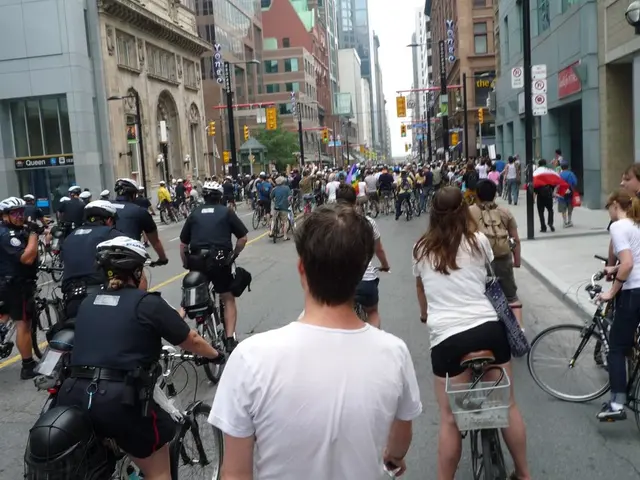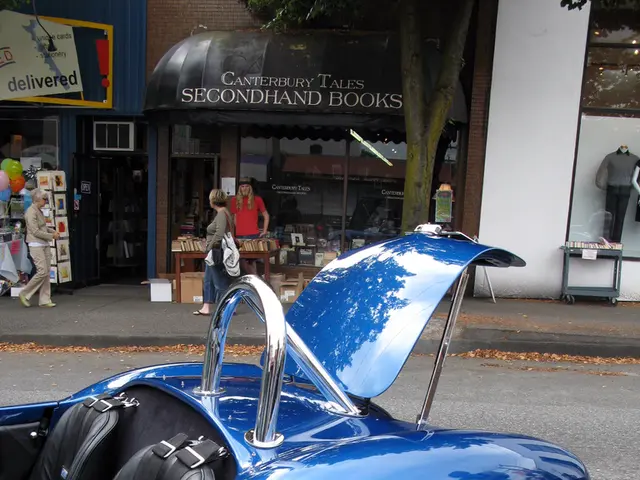
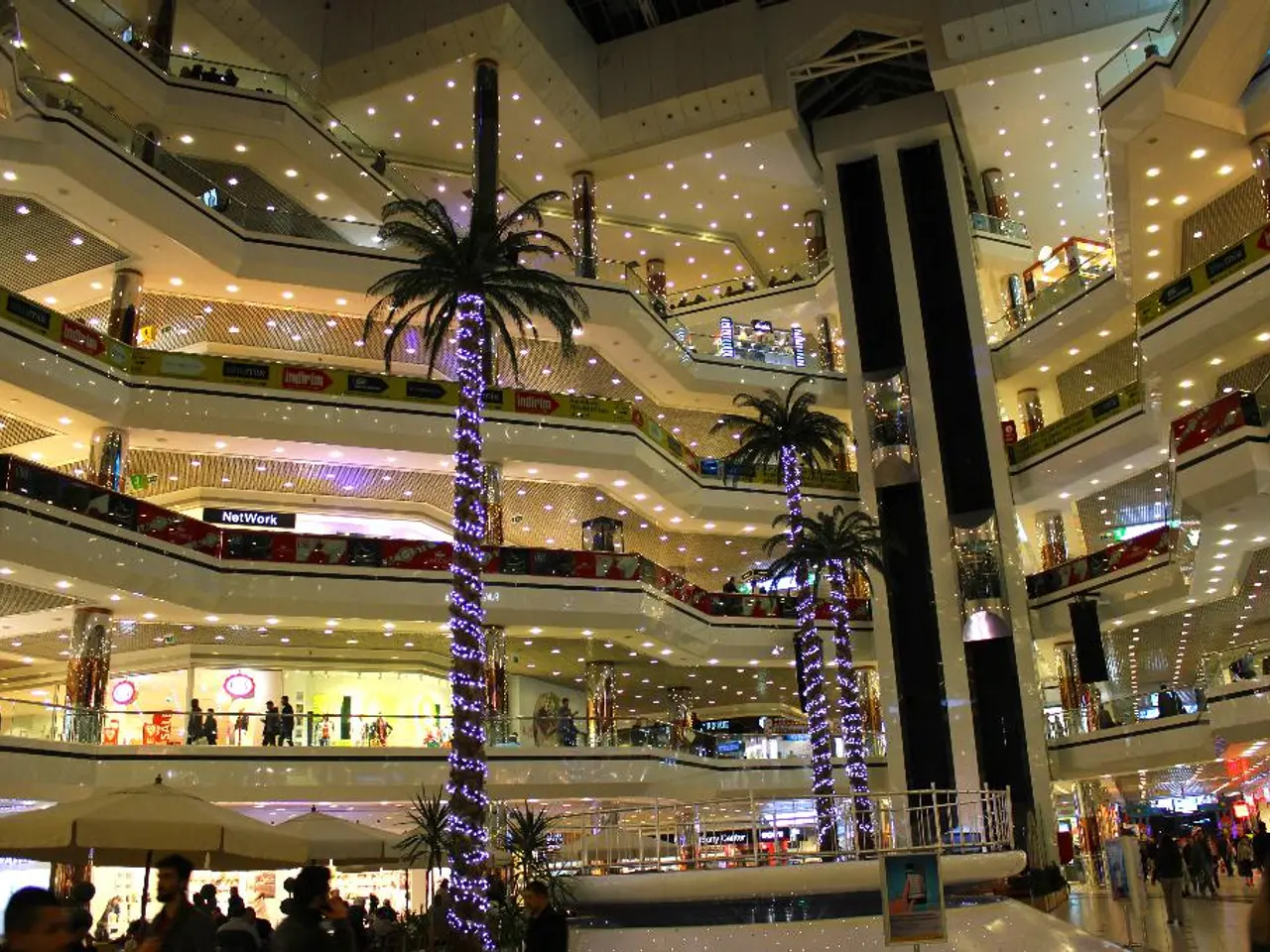
Summer's anticipated increase in business for urban retail areas falls short in July.
Decline in UK High Street Footfall Continues
In a disappointing turn of events, footfall on UK high streets dipped once again in July, marking the second consecutive year of decline during the summer period that retailers had hoped would bring a much-needed boost.
According to the latest data, overall footfall in the UK, including high streets, retail parks, and shopping centres, decreased by 0.4% in July. This trend was particularly pronounced on high streets, where footfall dropped by 1.7% year on year, continuing a multi-year downward trend.
The decline in high street footfall can be attributed to several key factors. Economic cautiousness under the new Labour government has led shoppers to spend less or shop around more carefully, limiting retail visits. Additionally, the preference for retail parks over high streets has grown, as these locations offer convenience, value, or a better shopping experience.
High vacancy rates on high streets, with about one in seven shops currently empty, also contribute to the decline in footfall. These empty shops not only reduce the vibrancy and appeal of town and city centres but also create a sense of abandonment that discourages potential customers.
Structural changes in retail, such as the rise of online shopping, economic pressures, and changing consumer preferences, continue to erode high street visits. These factors, compounded by high taxes, have taken a significant toll on retail businesses, leading to job losses and company failures in recent years.
Despite these challenges, efforts are being made to support high streets. The government's plan to reduce business rates for most Retail, Hospitality, and Leisure premises is a step in the right direction. However, stakeholders argue that only substantial cuts and revitalization strategies will help bring empty shops back and attract customers.
Some cities, such as Manchester, Birmingham, and Leeds, are seeing footfall improvements, indicating that local factors and investments also play a role in revitalizing high streets. In Manchester, for example, the Oasis tour gave a local uplift in traffic, boosting spend across retail and hospitality.
Helen Dickinson, chief executive of the British Retail Consortium, expressed her disappointment at the lack of a summer boost in shoppers. She emphasized that structural issues and changing consumer habits require comprehensive solutions to reverse the trend and revitalize UK high streets.
In conclusion, the decline in UK high street footfall is a complex issue that requires a multi-faceted approach to address. By understanding the key factors contributing to this decline, stakeholders can work towards implementing effective strategies to support high streets and attract customers.
The decline in UK high street footfall not only impacts retail businesses financially, but also affects the broader industry, as businesses in the finance sector closely monitor economic indicators like footfall to forecast future trends.
In an effort to combat the downward trend, the government's plan to reduce business rates for retail, hospitality, and leisure premises is seen as a crucial step, as it aims to support businesses and stimulate growth within these sectors.