
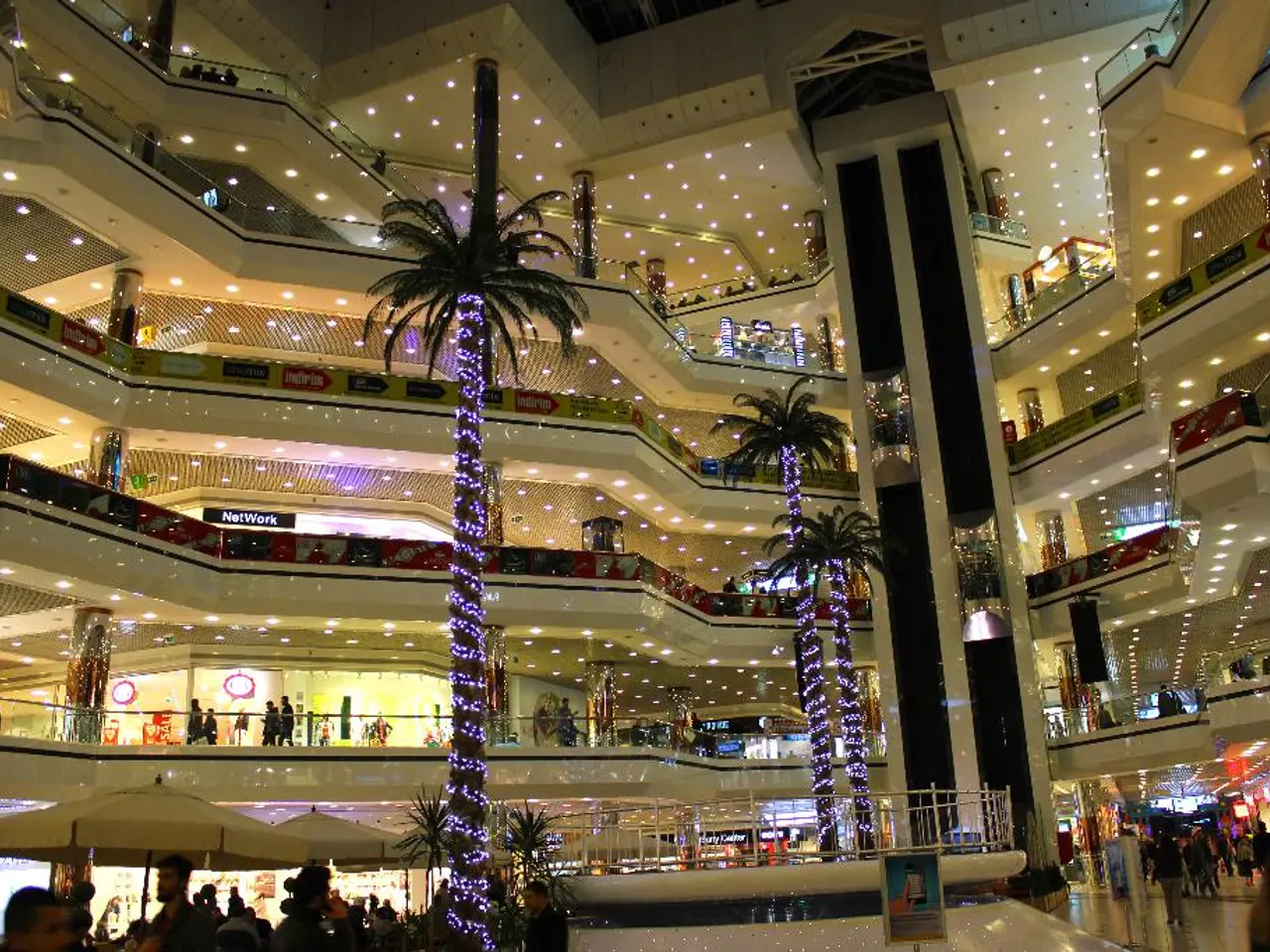
Unoccupied territories persist in Romania's contemporary retail sector landscape
In Romania, retail developers are increasingly focusing on secondary and tertiary cities as new targets for growth. These cities, which show substantial growth potential, have been overlooked in favour of economically stronger and more densely populated areas in the past.
The shift in strategy is driven by several factors. Firstly, the uneven distribution of modern retail infrastructure in Romania, with the Central-West region (Transylvania and Banat) surpassing Bucharest in terms of modern retail stock. This indicates a growing trend where modern retail infrastructure is expanding faster in regional hubs.
Secondly, there are notable retail expansions in secondary cities. For instance, the expansion of Mall Moldova in Iași by nearly 60,000 square metres, and developments in Suceava and Ploiești, demonstrate active development in these markets with growing consumer bases and retail demand.
Thirdly, the rise of e-commerce and the need for fast delivery have pushed retailers to develop regional logistics and retail hubs outside Bucharest. This is particularly true in well-connected secondary cities, such as Iași, Brașov, Sibiu, Timișoara, and Arad, which offer improved connectivity and accessibility.
Fourthly, economic growth and increasing retail demand in regional markets contribute to the attractiveness of secondary cities. Transylvania and Banat, along with other regional centres, show higher retail density growth and relatively attractive rental costs compared to the East of the country.
Fifthly, strategic location advantages also favour investment outside the capital. Infrastructure projects such as the A7 Motorway in Moldavia and the A0 ring road around Bucharest improve connectivity and accessibility, making secondary cities more appealing for retail development. Proximity to EU borders and industrial heritage also contribute to investment in these areas.
Lastly, improvements financed by the National Recovery and Resilience Plan and integration into the Schengen Area reduce transit times and costs, bolstering regional retail/logistics hubs and incentivizing retailers to expand where infrastructure and funding support growth.
As a result, retail consumption is projected to grow modestly despite inflationary pressures, ensuring demand remains resilient in areas with limited supply. The report suggests that retail park formats will be the dominant type of upcoming developments in underserved areas. These formats, requiring lower initial investment and offering more flexible leasing structures, are expected to dominate upcoming developments in these markets.
In conclusion, the uneven distribution of Romania’s modern retail market is driven by robust regional economic growth, enhanced infrastructure, logistics demands of modern retail/e-commerce, and active investment in urban centers beyond Bucharest. Secondary and tertiary cities are becoming prime targets as developers seek to capitalize on these advantages and the expanding consumer market outside the capital.
- The growth potential in secondary cities, coupled with the need for logistics and retail hubs outside Bucharest due to e-commerce, has led finance sectors to consider investing in the retail industry in these cities.
- With the rise in retail consumption and the strategic advantages offered by secondary cities such as improved connectivity and relative rental costs, the retail industry is seeing increased activity in these regions, making them attractive targets for retail developers.




